Showing posts with label SCECSAL 2014. Show all posts

Tuesday, August 19, 2014

SCECSAL 2014 was an eye opener

By Ocatvia Kgwasa
Participant from South Africa


Participants at a parallel session durng SCECSAl 2014
Being a young professional in the Library and Information Science (LIS) field, SCECSAL 2014 was an eye-opener. The papers presented showed how far information professionals and librarians have come in this ever changing technological world. The theme was relevant to what’s happening today. We need an information literate society for our continent to thrive and prosper. It is true, the Internet, has brought about a few challenges for the LIS professionals. How we have overcome those challenges and manage to remain relevant and important is interesting. The ideas shared through research are inspirational. The conference was well organised. It’s very unfortunate that some of the presenters were not able to make it. On the whole, the conference is necessary.

Given the opportunity, I would attend the next SCECSAL conference. It provides one with a platform to learn from LIS professionals in other countries and how far ahead, or behind one’s institution is in terms of the technological advancements and techniques in the field.

It’s always a great opportunity to be out of the office to attend training or a conference, especially when it is in another country. With that being said, I will admit, it was an awesome opportunity to be able to have attended SCECSAL XXI in Malawi.

Tuesday, August 12, 2014

Post SCECSAL 2014: advice to library and information professionals

By Geoffrey Nyamasege
Library Assistant and Social Media Officer
Strathmore University, Nairobi, Kenya


The SCECSAL Conference held in Malawi’s capital city Lilongwe was a great success by all means. It drew paper presenters from across African countries and by extension from other parts of the world. There were many lessons learned. It’s my hope that such lessons would be applied in parent institutions and organizations to facilitate effective service delivery and to keep our users engaged. It’s behind this zeal then I would want to share my two cents of thoughts of what I think we should do as professionals.

Geoffrey Nyamasege presenting a paper on social media
at SCECSAL 2014, Lilongwe, Malawi
First and foremost, we all know and recognize that information is key in all sectors of the economy. Key because information cultivates knowledge.  This information must be created, organized and disseminated through effective and user friendly channels in order to benefit the users. To achieve this, information professionals need to study their surroundings and seize the opportunities such a surrounding presents. They must take the good of their environment.

Investing in creating and disseminating knowledge will facilitate generation of future knowledge.  Analyzing and interpreting research findings particularly from the just concluded SCECSAL 2014 will help formulation and implementation of actionable strategies. This will help in return improve our economies of scale. Therefore, we must recognize the importance of information in all sectors of the economy.

As professionals, we must think beyond the theories thought in classrooms of the role of libraries and information centres. We must now develop good practice out of these theories. We must envisage the changing roles of these institutions in research and development. For instance, we must think along the emerging roles such as supporting current knowledge and national economy; facilitating creation of new and impacting knowledge through research. We must look at the value of knowledge in our custody and that which is being created in relation to the way such knowledge is used.

Information professional must establish a good working relationship with the rest of the faculty. Their new role would be to improve perceptions and increase resources provision. To achieve this, they would need to continuously offer Information literacy programs. And here the use of web technologies plays a major role as an enabler to knowledge dissemination. It would help in the utilization of resources and above all, improve user independence.

Another key component is that Information professionals must make their presence known and felt. How? In the presentations made for instance, internet usage among them Social Media and web technologies, presents best platforms for the information professionals to engage their counterpart colleagues as well as their users. SCECSAL resorted to use LinkedIn, twitter and YouTube accounts. This will develop long term relationships and long-life learning.

Information professionals must use the available technologies and incorporate them as part of their best practices. However, to realize this, there must be an enabling environment as well as capacity development. Such platforms must equally be applied not just for social networking but for professional work. It’s therefore important that web technologies be an integral part of our work, part of our strategies for the purposes of our core mandate in higher education. All these must be aimed at providing quality service delivery to our users be it be on-campus or off-campus!

What do we need to do to achieve this? We must make it our responsibility and our business. We must continuously create awareness by convincing and making those that we serve understand why this is so critical.

Of importance, everything we do or engage in, must translate to quality service delivery of our clients. This is how we will get to impact higher education and the society. Then we must now look beyond. We must transform the social economic development both of our institutions and organizations as well as at the national level. But then, wait a minute! We must yearn to collaborate and share knowledge. We must formulate new channels of knowledge sharing. We must in our institutions and organizations improve the quality of readership and scholarship.

Monday, August 4, 2014

SCECSAL 2014 General Assembly makes major decisions


Participants at SCECSAL 2014
The SCECSAL 2014 conference’s General Assembly on Friday, in Lilongwe, Malawi, made major decisions that will have an impact on the hosting of the SCECSAL biennial conferences, management of SCECSAL affairs in between the conferences, and the visibility and communication of SCECSAL activities.
Month for SCECSAL conferences

Henceforth all SCECSAL conferences will be in the month of April. This decision was made to make it easier for potential participants to plan their participation in the Conference in advance. It will also prevent Member Association hosting the conference to hold it in July or August, months that have potentially presented problems due to their closeness to the IFLA conference, which is held in August.

Management of the SCECSAL affairs
In between the SCECSAL biennial conferences, a Committee of Presidents/Chairpersons of the Member Associations shall manage SCECSAL affairs. The President/Chairperson of the Association that hosted the recent past biennial conference shall chair the Committee for a period of two years. The President/Chairperson of the next host of the SCECSAL conference shall serve as Secretary to the Committee for a period of two years.

Social Media presence
In addition to the SCECSAL web site, the General Assembly agreed to establish a presence on social media, specifically on LinkedIn, Twitter, Flickr and YouTube. An official SCECSAL blog will also be set-up. 

SCECSAL branding
The General Assembly agreed to re-brand SCECSAL, and adopted Blue, Green and Yellow as the main colours of the of the organization. A new logo will be designed.

Amendments to SCECSAL constitution
The General Assembly adopted a proposal to initiate amendments to the SCECSAL constitution.

Friday, August 1, 2014

SCECSAL 2014 resolutions

CONSIDERING the significant role of information and knowledge in socio-economic development;

CONGNISANT of the on-going national and global consultations on the post-2015 development agenda;

RECOGNIZING the need to integrate digital technologies into library and information work for optimal access;

RECOGNIZING the rights of people with special needs;

We the delegates of the XXIst SCECSAL Conference resolve that:
  1. Each SCECSAL member association should align its activities to the national and global development agenda and report on its post-2015 strategy at the XXIInd SCECSAL in 2016.
  2. In line with parent institutional policies and strategies, libraries and information centres in the SCECSAL region should develop e-strategies that encompass open access, social media, digitisation and e-learning resources for the provision of optimal access.
  3. SCECSAL member associations should host national conversations on the provision of information services to people with special needs.

Done, this 1st Day of August 2014, at Sunbird Capital Hotel, Lilongwe, Malawi.

PDF copy of the resolutions

SCECSAL 2014 cultural evening

South Africa

Zambia

Uganda

Kenya

Dancing to Kukere by by Nigerian recording artist Iyanya

Namibia

Botswana
Traditional dancers from Malawi

Thursday, July 31, 2014

Zambians steal the show at SCECSAL 2014 Cultural Evening

The victorious Zambians and well-wishers celebrating
On Thursday evening, librarians and information professionals from Zambia were crowned winners of the SCECSAL 2014 Cultural Evening award for the third time. The competition, a biennial event, involves participants from each member Library Association performing a cultural dance. The determined Zambians, who danced to Na Monga, a hit song by the Amayenge Band, dethroned their Ugandan colleagues, the defending champions and winners of the SCECSAL 2012 award in Kenya. The Ugandans came third behind the hosts, Malawi Library Association members, who took up the second position.

Except for information professionals from Zimbabwe who refused to take part citing lack of preparation, all the Member associations present at SCECSAL 2014 took part in the completion. They included Lesotho and Namibia that had only three and two participants respectively. The spirit to take on the mighty Zambians, the incredible Ugandans and the amazing Malawians, shown by these two countries impressed me.

Acrobatic displays and traditional dancers from Malawi spiced the Cultural Evening.

The question now is: who will win the 2016 Cultural Evening award?


Do libraries in Africa have a role in the provision of information to rural farmers?

Mr Prosper V. Mgalama from
 Tanzania Public Service College 
Today’s Parallel Session II at SCECSAL 2014 focused on agricultural information services in socio-economic development. WiseGeek defines socio-economic development as "a process that seeks to identify both the social and the economic needs within a community, and seek to create strategies that will address those needs in ways that are practical and in the best interests of the community over the long run".

Socio-economic activities and needs in most rural communities in Africa revolve around farming. Providing access to appropriate agricultural information and knowledge on agricultural technologies and sustainable practices can therefore contribute to increasing incomes and improving livelihoods of the rural farmers. It was therefore good to see librarians discussing the role they could play in meeting the information needs of rural farmers.

The following presentations were made at the session:
  • The Role of Agricultural Services in Socio-economic Development in East Africa; A Critical Review - Mr Prosper V. Mgalama, Tanzania Public Service College 
  • The role of Kasisi Agricultural Training Centre in providing information on organic to the small scale farmers in Kasisi area of Chongwe District, Zambia - Ms Naomi Mtanga, Department of Library and Information Studies, University of Zambia.
  • A Hidden factor hindering agriculture in bringing socio-economic development in Tanzania and other Sub-Sahara countries - Mr. Martin Tetti, Tanzania Public Service College
The discussions at the end of the session focused on what could be the role of libraries in the provision of agricultural information to farmers.
Libraries serve defined communities of users. For example, university libraries target university communities made up of students, lecturers, researchers, etc; school libraries mainly respond to the information needs of the students; public libraries target the residents in their communities; special libraries are largely closed and only serve members of the parent organizations.

Rural farmers are a highly specialised category of information users. For example, they need information about markets and prices for their produce; weather information; information on agricultural inputs and agricultural finance, etc. The information is sourced from several different organizations including markets, banks, metrological stations, etc. The information also has to be processed and re-packaged into formats that suit the needs of the farmers. 

In my view, provision of appropriate agricultural information services to rural farmers goes beyond the mandate of most librarians and libraries in Africa. Most of these institutions are located in cities and are not in touch with the farming communities in rural areas. They also lack financial resources to carry out the demanding activities required to provide high quality and specialised agricultural information services. Some do not even have access to sustainable ICT infrastructure, and staff with appropriate skills. Public libraries located in rural areas, that could be the best options for this service, are among the most neglected libraries in most countries.

What role could librarians and libraries in Africa play in the provision of agricultural information services to rural farmers?
 

Wednesday, July 30, 2014

SCECSAL 2014 participants at Lake Malawi


SCECSAL 2014 participants on a bus to Lake Malawi
Wednesday, 30 July, was an excursion day for SCECSAL participants. All roads led to the beautiful Lake Malawi, and specifically to Sunbird Livingstonia Hotel, located on the shores of the lake. Kudos to the SCECSAL 2014 hosts, the Malawi Library Associations, for taking the participants to Lake Malawi. It was worth it. We enjoyed the "The Warm Heart of Africa".
Stop over at a Total Petrol Station
Entering Sunbird Livingstonia Hotel
On the premises of the Sunbird Livingstonia Hotel
Lunch time at Sunbird Livingstone Hotel

Happy participants from Namibia and Botswana
Participants from Zambia pose for a group photo
Participants playing beach volleyball

Beach football


/
Dancing to P-Square's Taste The Money (Testimony)


Participants from Malawi preparing for Thursday's Cultural Nite
On the road going back to Lilongwe


Tuesday, July 29, 2014

Map digitization project @ the Okavango Research Institute Library

Ms Olebogeng Suwe, Assisitant Librarian at ORI
One key challenge faced by librarians in the SCECSAL region is how to ensure long-term preservation and continued access to their special collections. These are in most cases collections of unpublished or grey literature types of information resources, mostly limited in numbers, i.e. only one copy available. Continued handling of these information resources by the users puts them at the risk of being damaged or even lost forever. Therefore, librarians are looking for solutions for long-term preservation of the resources. Today, the solution mostly involves digitization.

A paper on a digitization initiative, presented at the SCECSAL 2014 by Ms Olebogeng Suwe, Assistant Librarian at the Okavango Research Institute (ORI) Library, illustrates the strategies being used to preserve special collections in libraries. The ORI Library, a part of the University of Botswana Libraries, has a priceless collection of maps by Peter Alexander Smith, a naturalist who traversed the Okavango Delta, a major wetland in north-west Botswana, with a very rich flora and fauna. Mr Smith scribbled his observations and notes on 1:50000 topographic maps. The maps have approximately 4500 handwritten annotations of observed flora, fauna, places and water channels within the delta, making them a very rich and rare source of information on the flora and fauna of the Okavango Delta.
Access to these maps is very restricted due to their fragility. Therefore, to enhance access to the maps, the ORI Library decided to digitize them and make them available in digital format. This initiative was carried out in partnership with the Geographic Information Systems Laboratory (GIS lab) of the University of Botswana.

Key outputs of the initiative were the following:
  • The maps have been scanned and imbedded with spatial coordinates using a Geographic Information System (GIS) from the ORI GIS laboratory.
  • Annotations on the map have been cleaned (i.e. verified and checked for errors) and are now stored as a points in a GIS database
  • The images and annotations have converted for Internet access using a GIS internet map server
The above will ensure continued preservation of the maps and enhanced access to these priceless resources in digital format.

Further information on the initiative: Ms Olebogeng Suwe, Assisitant Librarian at ORI, email: lebosue2004@yahoo.com OR osuwe@ori.ub.bw

Monday, July 28, 2014

Social media and librarians in the SCECSAL region


Today’s sessions at SCECSAL 2014 included a session on social media. Charles Banda, from the Copperbelt University Library and a PhD candidate at the University of Botswana, presented a paper focusing on the adoption of Web 2.0 in public university libraries in Zambia. The paper was based on a survey of professional librarians at the University of Zambia, the Copperbelt University and Mulungushi University. It generated a lot of interest and discussion and the participants.
The main finding by Charles was that, while most librarians have the facilities, i.e. the Internet both at work and at home, to access and use social media platforms, the use is largely for personal social networking than for professional networking or library related work.

Charles’ findings are similar to the ones in a study that I conducted in 2012 with a colleague, Dr Rehama Chande-Mallya from Muhimbili University of Health and Allied Sciences Library in Tanzania. The purpose of our study was to establish the extent to which library and information professionals in the Standing Conference of Eastern, Central and Southern Africa Library and Information Associations (SCECSAL) region were using social media applications for professional networking. Our findings showed that although the professionals were adopting social media, its use was more for social networking than professional networking purposes.
Why are most library and information professionals in the SCECSAL region not using social media for professional networking and/or library related work?

After all most of them have access to the Internet and social media platforms. They also have access to ICT tools such as computers and mobile technologies i.e. smart phones and tablet computers such, i.e. iPads, Samsung Galaxy Tabs, etc, that facilitate mobile access and use of social media. They also have been to universities and attained the level of education that could make them appreciate the importance of social media in their work and professional networking. They are also already using social media for personal social networking and therefore already know how to use and manipulate the tools. For university or academic librarians, they also have a huge army of library users who can be targeted with social media based information services - the students. Millions of young people, especially students in secondary schools, colleges and universities in Africa, use social media.
Why then are most librarians in the region not using social media for professional networking or providing social media based library and information services?

I would be glad to hear your views through the comments facility on this blog post.

SCECSAL 2014 opens in Lilongwe, Malawi

SCECSAL 2014 opened today at Sunbird Capital Hotel in Lilongwe, Malawi. The Minister of Education, Science and Technology, Dr Emmanuel Fabiano, officiated at the opening ceremony. The Malawi National Dance Troop entertained the participants with a series of dances from various regions of Malawi. Below are photos from the first day of the conference.


SCECSAL participants arriving at the conference venue

Prof. Joseph Uta & Dr Augustine Msiska arriving at the conference venue


Malawi National Dance Troop entertaining participants


SABINET exhibition at SCECSAL 2014


Ms Margaret Ngwira and Dr Buhle Mbambo-Thata


Participants enjoying tea and snacks

 
Dr Emmanuel Fabiano, Minister of Education, Science and Technology at the opening session

Sunday, July 27, 2014

Lilongwe welcomes SCECSAL 2014 participants

Participants to the SCECSAL 2014 conference started arriving in Lilongwe on Saturday, 26 July to take part in pre-conference events scheduled for Sunday, 27 July. The main pre-events are the Digital Course Redesign: Resource Repurposing for Librarians Workshop and SCANUL-ECS conference.

The Malawi Library Association (MALA) is hosting the biennial conference from 28 July to 1 August. This is the second time MALA is hosting the SCECSAL conference. The first time was in 1994.

This year’s conference is on the theme Information and Knowledge Management as a Driving Force for Socio-Economic Development in Africa. About 60 papers will be presented at the conference sessions. These will cover the following conference sub-themes:
Information and Communication Technology (ICT) for knowledge-based economies
  • LIS Education and Socio-Economic Development
  • Social media and socio- economic development
  • Conflict management: The role of archives and records
  • The impact of Libraries and Information services in shaping knowledge economies
  • Information literacy for socio- economic development
  • The Role of Agricultural Information services in socio-economic development
  • Knowledge and Information for persons with special needs
  • Knowledge and Information in health care delivery services
 
Professor King Mchombu, a renowned of library and information science from the University of Namibia, will deliver the keynote address.
 
SCECSAL 2014 will also include a panel discussion on the IFLA Trend Report. The Report identifies the following five top-level trends that will play a key role in shaping the future information ecosystem:

  • TREND 1 - New Technologies will both expand and limit who has access to information.
  • TREND 2 - Online Education will democratise and disrupt global learning.
  • TREND 3 - The boundaries of privacy and data protection will be redefined..
  • TREND 4 - Hyper-connected societies will listen to and empower new voices and groups.
  • TREND 5 - The global information environment will be transformed by new technologies

The panellists – Jacinta Were, Justin Chisenga, Sara Kaddu and Ujala Satgor, will deliberate on the report and identify its impacts on Africa, and recommend strategies for information access and delivery.

Dr. Buhle Mbambo-Thata, from the University of South Africa, will facilitate the discussions.

Friday, July 18, 2014

SCECSAL 2014: An Invitation to an Excursion to Lake Malawi

An eagle catches a fish on Lake Malawi.
Photo credit: Sara&Joachim
SCECSAL 2014 Orgnisers are inviting all participants  to join an exciting excursion to Lake Malawi on Wednesday, 30 July 2014.

The excitement will include but not limited to the following…!!!
  • Site seeing enroute to Lake Malawi
  • Luncheon
  • Competitive games
  • Traditional dances
  • Dance ball with a popular DJ in Town, etc

Token contribution: US$15.00 (MK6000.00)

Please, register in ADVANCE with Stanley Gondwe on:

+265 (0) 888 597 640/ (0) 888 349 948
+265 (0) 888 105 560/ (0) 999 231 115
Email: stanleygondwe@yahoo.com

Wednesday, July 9, 2014

SCECSAL 2014: Airport welcome

All participants traveling to Malawi for the SCECSAL 2014 Conference should inform SCECSAL Protocol about their flight schedules for proper planning on how to welcome them at the Airport.

Please, send the flights details (names, date, airline/flight number and arrival time) to:

Felix P. Majawa
Chair Protocol Sub-Committee
Email: fmajawa@yahoo.com OR fmajawa@gmail.com

Any changes to flight details should also be communicated to SCECSAL Protocol.

Wednesday, July 2, 2014

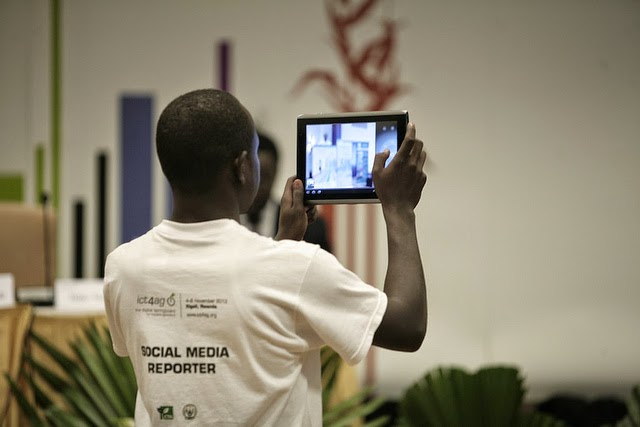
Social media reporters for SCECSAL 2014 wanted


Are you planning to attend SCECSAL 2014?

A social media reporter at work during the ICT4Ag Conference - Source: CTA ARDYS - http://ardyis.cta.int/
A social media reporter at work during the ICT4Ag Conference.
Source: CTA ARDYS
I am looking for library and information professionals to volunteer as Social Media Reporters during the SCECSAL 2014 conference in Lilongwe, Malawi, 28 July - 1 August. These should meet the following requirements:
  1. Will already be attending SCECSAL 2014 conference
  2. Own a WiFi enabled laptop or a tablet (i.e. iPad, Samsung Galaxy Tab, etc.)
  3. Have some experience with using social media (at least one of the following platforms: Twitter, Facebook, Blogs, Flickr, and YouTube)
Social Reporters will be part of the SCECSAL 2014 Social Media Team and will be involved in a coordinated, live reporting of the proceedings of SCECSAL 2014 on various social media platforms.

If you are interested in this experiment, please drop me a note at: chisenga_j@yahoo.co.uk. Please, put Social Media Reporter in the subject of your email

Justin Chisenga

Monday, June 23, 2014

Pre-conference workshop on Digital Course Redesign, 27 July 2014

This day-long program will introduce participants to theory, best practices, and hands-on experience in assisting educators to redesign traditional curricula into digital courses that can be delivered in the classroom, via a local area network, or over the Internet.

For course details, download the course annoucement (in PDF).

Venue: Kamuzu College of Nursing, University of Malawi
Time: 9am - 4pm

Friday, May 30, 2014

SCECSAL 14 - Yellow fever requirements

All those planning to travel to Lilongwe, Malawi for SCECSAL 2014 should note that it is a requirement that all visitors to Malawi must be inoculated against Yellow fever. Please bring evidence to show at the airport upon arrival.

Monday, May 19, 2014

IFLA Trends Report: Letter to Chairs/Presidents of Library Associations

Chairs/ Presidents of Library Associations,

The IFLA Trend Report was launched in Helsinki in 2013. It is a discussion document for engagement and comment by the LIS community. SCECSAL has placed the matter on the agenda for discussion at AGM the July 2014 meeting. A panel of experts will lead discussion. Furthermore the Trend Report is also set for discussion on the recently set up Africa-L listserve.

On behalf of the IFLA Regional office for Africa, I would like to ask you and the LIS community in your country to engage with the IFLA Trend report before heading to SCECSAL in July 2014 in Malawi. I request that you please send me a brief report of the outcomes of your discussions so that we can compile a combined report for SCECSAL.

You may access the report on the link http://trends.ifla.org/ or download a PDF copy.
  • TREND 1 New Technologies will both expand and limit who has access to information.
  • TREND 2 Online Education will democratise and disrupt global learning.
  • TREND 3 The boundaries of privacy and data protection will be redefined..
  • TREND 4 Hyper-connected societies will listen to and empower new voices and groups.
  • TREND 5 The global information environment will be transformed by new technologies.
It is envisaged that at the end of the session Africa’s contribution to the Trend Report will be shared with the rest of the LIS global community on IFLA listserve and the newly formed Africa – L list http://infoserv.inist.fr/wwsympa.fcgi/info/africa-l

We look forward to hearing from you and welcome your responses by end June2014. Follow up reminders will be continuously be sent to you before the deadline. Kindly submit your country report to me, copy mbambtb@unisa.ac.za and Justin.Chisenga@fao.org

Regards
Lindy Nhlapo
IFLA Regional Manager for Africa
IFLA Regional Office for Africa

Friday, May 16, 2014

SCECSAL 2014: A Selection of entertainment, shopping and eating places

The Malawi Library Association has issued a list of selected entertainment, shopping and eating places for the benefit of SCECSAL participants. Click on the link below for details.

Wednesday, May 7, 2014

Accommodation during SCECSAL 2014

The SCECSAL 2014 Organizing Committee has announced a list of hotels (and room rates)  available to participants during the conference.